 100% Secure Payments
HVLS Fan Incentives: How to Save on Energy-Efficient Airflow Systems
Share:


Every kilowatt saved translates to lower overhead, better comfort, and a lighter environmental footprint. For large facilities such as warehouses, manufacturing plants, and distribution centers, HVLS fan incentives can make those energy savings even more substantial.
High-Volume, Low-Speed (HVLS) fans move massive amounts of air with minimal energy use. They help regulate indoor temperatures, reduce HVAC strain, and improve comfort across wide open spaces, all while using a fraction of the power of traditional systems. And here's the part many facility managers overlook: there are real financial incentives available that make upgrading to HVLS fans more affordable than ever.
Between federal tax deductions, local rebate programs, and utility-sponsored initiatives, businesses can offset a significant portion of their installation costs. Whether you're planning an energy retrofit or upgrading your air circulation system, understanding how these incentives work is the first step toward unlocking serious savings.
Pro Tip: Don't assume these programs are just for big corporations—small and mid-sized facilities can qualify, too.
TABLE OF CONTENTS
Why Incentives Exist Federal Tax Credits and Deductions State and Local Rebates Utility-Sponsored Rebates Stacking Incentives for Maximum ROI How to Find and Apply The Financial Case Choosing the Right HVLS Fan FAQs
Why Incentives Exist for HVLS Fans
Incentive programs exist to reward efficiency, and HVLS fans are one of the simplest, most impactful upgrades a facility can make. These massive ceiling fans use precision-engineered blades to move high volumes of air at low speeds, creating a gentle, consistent airflow that helps stabilize indoor temperatures and reduce the need for constant HVAC cycling.
When the air in a facility becomes stratified (with hot air collecting near the ceiling and cooler air settling below), heating and cooling systems have to work harder to maintain a comfortable temperature at the floor level. HVLS fans help eliminate that imbalance through destratification, evenly distributing warm and cool air throughout the space. The result? Lower energy consumption, less wear on HVAC equipment, and better comfort for everyone on the floor.
That's exactly why federal, state, and utility programs are eager to support these installations. When a company invests in HVLS technology, it's not just improving its own environment; it's helping reduce grid demand and overall emissions.
So, it's no surprise that there are real financial rewards for making the switch. Let's break down the key HVLS fan tax credits, deductions, and rebate programs available in 2025 and beyond.
Federal Tax Credits and Deductions for Energy Efficiency
When it comes to industrial energy efficiency incentives, few opportunities deliver as much value as federal tax deductions. For facilities investing in energy-efficient equipment like HVLS fans, these programs can help significantly reduce upfront costs and improve ROI.
Section 179D: Commercial Building Energy-Efficiency Deduction
The 179D deduction rewards businesses that install systems that reduce energy use in commercial buildings. This includes HVAC, ventilation, and air circulation systems, making HVLS fans a strong candidate when used to improve a facility's overall efficiency.
As of 2025, projects that meet enhanced efficiency targets may qualify for deductions of up to $5 per square foot. Eligible participants include:
- Owners of commercial and industrial facilities
- Designers of public buildings (such as engineers and architects)
- Companies completing energy-efficient retrofits
Because HVLS fans contribute to better thermal uniformity and reduced HVAC demand, they can help facilities meet ASHRAE 90.1 performance standards, often used in 179D energy modeling. Independent studies show that destratification in large warehouses can cut heating energy by 19–30 percent, demonstrating measurable savings that qualify for efficiency-focused programs.
Pro Tip: To claim this deduction, documentation matters. Work with a licensed energy modeler or tax professional familiar with 179D requirements to verify your savings potential.
Additional Federal Programs & Funding Pathways
Beyond 179D, several federal initiatives support energy-efficient facility upgrades:
- DOE Better Buildings Initiative – Offers cost-share opportunities and technical guidance for industrial process improvements and efficient equipment.
- EPA ENERGY STAR for Industry – Recognizes and supports manufacturers that adopt high-efficiency technologies, improving visibility and ROI when paired with rebate programs.
HVLS fans also enhance a facility's energy modeling scores, which can strengthen applications for broader sustainability grants and federal funding streams.
State and Local Rebate Programs
While federal incentives get the spotlight, state and local energy efficiency programs for warehouses can often deliver equally valuable savings, sometimes even faster. These programs are typically administered by energy commissions or local utilities, each rewarding measurable reductions in electrical consumption and HVAC load.
Rebates are usually calculated in two ways: as prescriptive incentives (a fixed dollar amount per qualifying fan or system) or custom incentives (based on verified kilowatt-hour savings after installation). Depending on the region, rebates for HVLS fans can range from a few hundred dollars per unit to several thousand dollars for large retrofit projects that show documented energy reductions.
Pro Tip: Most state and utility programs require pre-approval before installation. Always confirm requirements before you start ordering or scheduling installs to make sure your project qualifies.
Let's take a look at how these incentives break down across key regions in the U.S.
California: Energy Commission and Local Utility Rebates
California's leadership in efficiency means strong support for HVAC and air movement upgrades. The California Energy Commission (CEC) and major utilities such as PG&E, SCE (Southern California Edison), and San Diego Gas & Electric all offer commercial rebates for air circulation and ventilation improvements.
Under PG&E's Customized Retrofit Incentive, for example, businesses can receive rebates based on measured kilowatt-hour savings achieved after installing HVLS fans. The result: verified energy reductions turn into real financial paybacks, sometimes offsetting a significant portion of installation costs.
Texas: Oncor and CenterPoint Energy
In Texas, programs such as Oncor's Commercial Standard Offer Program (CSOP) and CenterPoint Energy's Commercial Solutions Program help businesses reduce demand on the power grid. These initiatives provide both prescriptive and custom rebates for HVAC and ventilation upgrades, including HVLS fans that help contribute to lower peak energy loads.
Tennessee: TVA EnergyRight® Solutions
The Tennessee Valley Authority (TVA) offers EnergyRight® Solutions, a suite of incentives aimed at industrial and commercial customers. The program rewards measurable energy savings and can cover part of the cost of qualifying upgrades, such as HVLS fans.
Florida: FPL Business Energy Efficiency Programs
Florida's FPL Business Energy Efficiency Program provides rebates for equipment that enhances comfort and reduces peak cooling demand. HVLS fans qualify when they're used to help optimize HVAC performance or improve air circulation in large commercial or warehouse environments.
By helping to offset high cooling costs in warm climates, these programs make energy-efficient airflow systems even more attractive to facility managers focused on both comfort and savings.
Utility-Sponsored Rebate and Incentive Programs
Many power providers offer their own commercial fan rebate programs, rewarding customers who invest in technology that reduces energy consumption or shifts load off the grid. For large facilities running HVAC systems day and night, HVLS fans fit perfectly into these initiatives by improving efficiency while easing the strain on local infrastructure.
There are two primary types of utility incentives you'll encounter.
Prescriptive Rebates
These are fixed, per-unit rebates given for equipment that meets pre-defined efficiency criteria. For example, a utility might offer a $200–$500 rebate per qualifying HVLS fan, depending on diameter and verified airflow performance. This approach is straightforward. Once your installation meets the utility's specifications, you submit documentation and receive a set rebate amount.
Custom Incentives
Custom programs reward measured performance rather than equipment specs. Rebates are calculated based on actual kilowatt-hour (kWh) or kilowatt (kW) savings, often determined through post-installation verification. This model works especially well for industrial operations where energy use varies by season or shift schedules.
Pro Tip: If your facility uses energy modeling software or conducts an audit before installation, that data can help you qualify for the higher tier of custom incentives.
Examples of Utility Programs Nationwide
Across the U.S., many major utilities offer rebate programs designed to encourage energy-efficient upgrades like HVLS fan installations. Here are a few notable examples:
- Duke Energy (Southeast & Midwest): Offers prescriptive rebates for high-efficiency HVAC and air circulation equipment in manufacturing and warehouse environments. HVLS fans can qualify as part of an integrated efficiency upgrade.
- Pacific Power (Western U.S.): Provides custom incentives for facilities achieving verified reductions in HVAC-related energy demand through destratification and improved airflow systems.
- National Grid (Northeast): Supports commercial and industrial customers with both prescriptive and custom incentive pathways, often tied to measured peak load reduction.
Each of these utilities requires pre-approval before installation, ensuring the proposed project meets program criteria. Skipping that step can disqualify an otherwise eligible system, so always confirm with your local representative before placing an order.

Stacking Incentives for Maximum ROI
The smartest facilities stack multiple HVLS Fan Incentives to multiply their return. Because federal, state, and utility programs are designed to work together, it's often possible to combine several forms of financial support on a single project.
Here's how it typically works:
- Start with the federal layer: For example, the Section 179D deduction for energy-efficient building systems. This can reduce your taxable income based on the square footage and verified energy savings achieved through HVLS fan installation.
- Add state or local rebates that reward air circulation and HVAC optimization. These often provide direct, per-fan payments or kWh-based reimbursements once savings are verified.
- Top it off with your utility provider's rebate — prescriptive or custom — for additional cash-back or bill credit once your project is complete and documented.
Example Scenario: A large warehouse installs six HVLS fans to improve air balance and reduce HVAC runtime. The facility earns a $2.50 per sq. ft. deduction under Section 179D, receives $1,500 in state rebates per fan, and secures a $400 utility incentive per unit. By combining these programs, the project shortens its payback period by nearly 40 percent and starts producing net energy savings within the first year.
Pro Tip: Keep meticulous records — invoices, performance data, installation photos, and approval emails. When stacking incentives, documentation is your best friend.
Stacking also complements accelerated depreciation under the Modified Accelerated Cost Recovery System (MACRS), which allows qualifying capital investments (like HVLS fans) to be depreciated more quickly. That means additional tax savings on top of the rebates you already earn.
By viewing these incentives as building blocks, facility managers can transform a standard airflow upgrade into a long-term investment strategy — one that delivers measurable comfort, compliance, and cost savings year after year.
How to Find and Apply for HVLS Fan Incentives
The process for securing HVLS fan rebates and tax credits is more straightforward than many assume. Here's how to navigate it step by step:
1. Conduct an Energy Audit or Assessment
Start by getting a clear picture of your facility's energy use. An energy audit helps identify where inefficiencies occur and how HVLS fans can make the biggest impact. Many utilities and state programs offer free or discounted audits for commercial customers.
2. Check Eligibility in the DSIRE Database
The Database of State Incentives for Renewables & Efficiency (DSIRE) is the most comprehensive online resource for energy programs in the U.S. You can search by state, technology type, or sector to find active rebates and industrial energy efficiency incentives that apply to HVLS fans.
Pro Tip: Bookmark the DSIRE website. It's updated regularly and often links directly to application forms for local programs.
3. Contact Your Utility Provider for Pre-Approval
Most utilities require pre-approval before installation. It's their way of confirming that the project meets program criteria and qualifies for funding. Be prepared to share your proposed fan model, estimated savings, and installation timeline.
4. Coordinate With Your HVLS Fan Manufacturer
Manufacturers like Hunter Industrial can supply performance documentation, airflow data, and spec sheets to strengthen your rebate application. These materials demonstrate energy savings potential and may be required by auditors or utility reviewers.
5. Submit Proof of Installation and Savings
After installation, you'll need to provide documentation, typically invoices, model serial numbers, and a summary of measured savings or HVAC load reduction. Once verified, rebates are usually issued within 6–12 weeks.
Pro Tip: Organize your documentation into one digital folder (plans, invoices, application forms, approval letters). Keeping this bundle handy makes future rebate submissions or audits much easier.
The Financial Case for HVLS Fans
Even without rebates or tax credits, HVLS fans already make strong financial sense for most large facilities. Their ability to move air efficiently across vast spaces translates into potentially lower utility bills, reduced strain on HVAC systems, and improved year-round comfort for employees. When you add HVLS fan tax credits and other incentives into the equation, the payoff becomes even better.
Here's what that looks like in practice:
- Reduced HVAC runtime: By destratifying the air and evening out temperatures, HVLS fans help cut down on the number of heating and cooling cycles your system needs to maintain comfort.
- Lower maintenance and equipment wear: With less demand on HVAC compressors and motors, long-term maintenance costs drop as well.
- Faster payback period: Energy savings, combined with available rebates and deductions, can reduce project payback
For facility managers focused on sustainability metrics, these upgrades can also support LEED, ENERGY STAR, and ESG reporting goals.
Pro Tip: Pair your incentive documentation with an internal energy-savings report. Tracking data before and after installation not only validates ROI but also strengthens your case for future efficiency projects.
Potential Tax Benefits Disclosure
Important! We are providing general information regarding potential tax benefits and rebates, which are subject to change. The availability and applicability of these incentives depend on your specific circumstances and may vary by location and business type. Consult a qualified tax advisor and local utilities company to fully understand and verify the tax benefits, savings, and rebates that may apply to your purchase.
Choosing the Right HVLS Fan for Your Facility
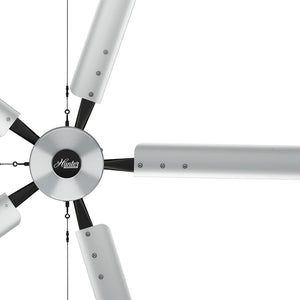
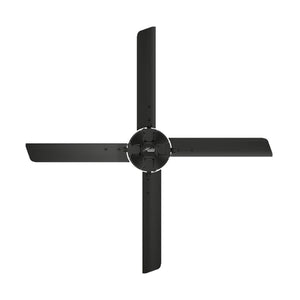
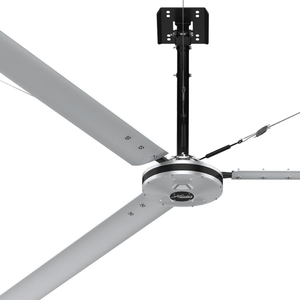
Finding the best HVLS fan involves matching the right performance and features to your facility's layout, ceiling height, and airflow goals. Each model in Hunter Industrial's HVLS lineup is engineered for different use cases, but all share one key advantage: Direct Drive Motors that deliver powerful performance with quiet, energy-efficient operation.
Here's a quick breakdown of the models and where they shine:
Titan
The Titan HVLS fan is the powerhouse of the Hunter Industrial lineup. Designed for large industrial spaces such as warehouses, manufacturing plants, and aircraft hangars, this fan moves massive volumes of air to balance temperature from floor to ceiling. Its Direct Drive Motor and precision airfoil blades make it ideal for facilities targeting major HVAC load reduction — a key advantage for qualifying under incentive programs tied to verified energy savings.

ECO
The ECO HVLS fan delivers high performance at a lower upfront cost, making it a great choice for facilities that want efficiency without overinvesting. It's versatile enough for a range of industrial and commercial environments, offering quiet operation and robust airflow for mid- to large-sized spaces. The ECO's efficient design also makes it a strong candidate for commercial fan rebate program.

XP
Compact and efficient, the XP HVLS fan is built for mid-sized commercial spaces like fitness centers, breweries, distribution hubs, and retail warehouses. Despite its smaller size, the XP provides exceptional destratification and air circulation, helping operators reduce HVAC use while maintaining comfort in mixed-use or open environments.

DDI
The industrial DDI HVLS fan is engineered for tough environments where reliability and low maintenance are critical. It delivers consistent airflow in manufacturing, automotive, and heavy-duty applications — with the same quiet, efficient operation as all of our HVLS fans. The DDI's rugged design makes it perfect for year-round performance, particularly in facilities looking to integrate continuous energy efficiency into daily operations.

Pro Tip: Because rebate thresholds often vary by equipment type and energy savings potential, choosing the right model can directly influence how much incentive funding your project qualifies for. Always confirm specs with your local utility or rebate administrator before finalizing a purchase.
No matter which model you choose, each Hunter Industrial HVLS fan is designed to deliver comfort, long-term savings, and the durability.
Maximize HVLS Fan Incentives and Energy Savings
By combining HVLS fan incentives, rebates, and tax credits, your facility can achieve energy savings while improving comfort and productivity for everyone inside. Explore the full lineup of HVLS fans at Hunter Industrial to see how the right model — paired with available incentive programs — can transform your building's airflow and bottom line.
FAQs: HVLS Fan Incentives
Facilities can take advantage of federal tax deductions, state and local rebate programs, and utility rebates HVLS fans qualify for when they demonstrate measurable energy savings. These incentives can significantly reduce upfront costs and shorten the project's payback period.
Yes. HVLS fans that contribute to measurable reductions in a building's energy consumption may qualify under Section 179D, which offers deductions of up to $5.00 per square foot for qualifying projects. Always work with an energy modeler or tax specialist to confirm eligibility.
In most cases, yes. Facilities can stack incentives by combining federal tax deductions with state, local, and utility rebate programs. This strategy maximizes total savings and accelerates ROI, provided each program's documentation and pre-approval requirements are met.
Start by checking the DSIRE Database for active programs in your state, then confirm details with your local utility provider. You can also contact Hunter Industrial for technical data, airflow modeling, and performance documentation, all of which help verify eligibility for industrial energy efficiency incentives.
Share:


Products
Industry Leading Efficiency